Do Consultants Need Professional and General Liability Insurance?
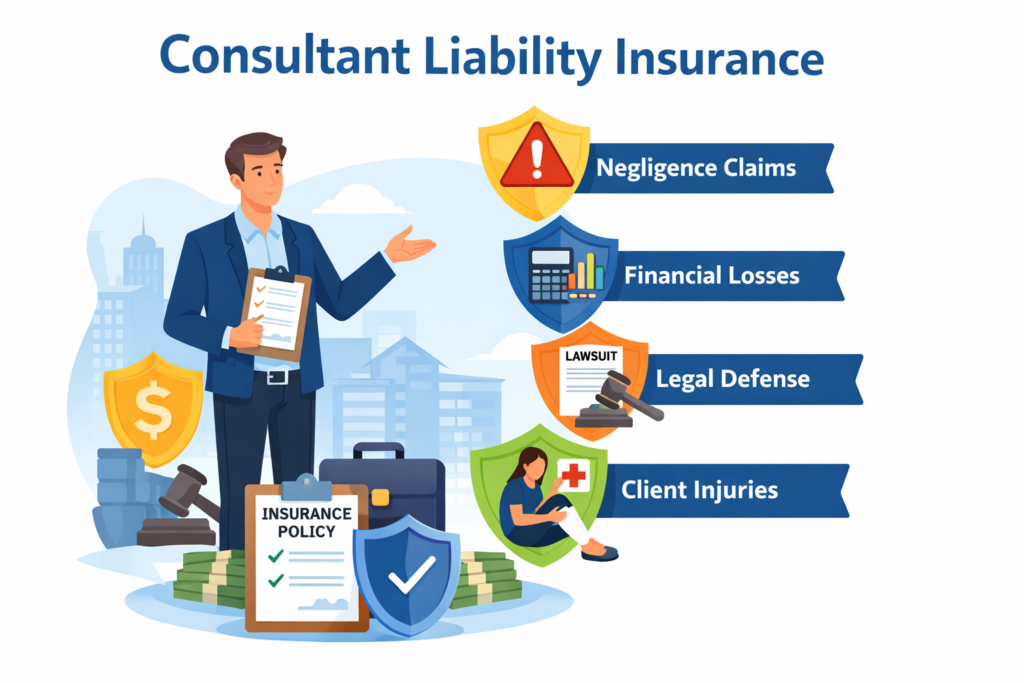
Home Do Consultants Need Professional and General Liability Insurance? (Complete Guide) March 20, 2026 insuremia Est. Read Time: 10 min On This Page Many professionals wonder whether consultant liability insurance is truly necessary when starting or growing a consulting business. The reality is that even experienced consultants face risks from client disputes to claims of negligence or financial loss. Consultant liability insurance helps protect your business from these risks by covering legal costs, settlements, and unexpected claims. Whether you’re an independent consultant or running a firm, understanding how this coverage works is essential to protecting your income and reputation. Many professionals ask do consultants need liability insurance when starting a consulting business. The reality is that consultants face risks such as client disputes, professional mistakes, and property damage claims. Understanding whether consultants need liability insurance is important before signing contracts or working with clients, because one lawsuit could financially damage a consulting business. Do Consultants Need Professional and General Liability Insurance? Yes many consultants need both. The answer is not about redundancy. It is about coverage gaps. Professional liability insurance (also called errors and omissions insurance, or E&O) protects consultants when a client claims that your advice, recommendations, or services caused them financial harm. It is designed specifically for service-based businesses where the work product is expertise, judgment, or specialized knowledge. General liability insurance protects against physical and reputational harm to third parties think bodily injury, property damage, and advertising injury claims. It covers incidents that have nothing to do with the quality of your professional work. Neither policy replaces the other. A consultant who carries only professional liability is exposed if a client trips during a meeting. A consultant who carries only general liability is exposed if a client sues over a failed project recommendation. Carrying both policies closes those gaps. Why Many Consultants Need Both Policies The distinction between these two policies comes down to what type of claim is being made. Professional liability responds to claims rooted in your services what you recommended, what you delivered, what you missed, or what you promised. General liability responds to claims rooted in physical or reputational harm that occur in the course of doing business. Consider a few realistic scenarios: Management consulting: A management consultant recommends a cost-reduction strategy. The client implements it, experiences unexpected revenue losses, and blames the consultant’s advice. This is a professional liability claim. General liability would not respond to it. IT consulting: An IT consultant visits a client’s office and accidentally damages an expensive piece of equipment. This is a general liability claim. Professional liability would not cover physical property damage. Marketing consulting: A marketing consultant develops an ad campaign alleged to have mimicked a competitor’s trademarked slogan, resulting in an advertising injury claim. General liability covers advertising injury. HR consulting: An HR consultant holds a workshop at a rented conference space and a participant slips and is injured. General liability covers bodily injury to third parties. Strategy consulting: A strategy consultant misses a contractual deliverable deadline. The client claims the delay caused a failed product launch—a professional liability claim based on breach of duty. Each scenario represents a real exposure that consultants regularly face. Relying on one policy to handle both categories of risk leaves meaningful gaps. What Professional Liability Insurance Covers for Consultants Professional liability insurance commonly referred to as E&O insurance for consultants protects you when a client holds you responsible for a financial loss tied to your work. Key coverage areas typically include: Errors and omissions: Claims that you made a mistake, gave incorrect advice, or delivered flawed work product Negligence: Allegations that you failed to meet a reasonable standard of care in your field Misrepresentation: Claims that you overstated your qualifications, capabilities, or expected results Missed deadlines or deliverables: Situations where failing to deliver on time caused the client measurable harm Breach of professional duty: Allegations that you violated a duty owed to the client under your agreement Defense costs: Legal fees and court costs even if the claim against you turns out to be groundless E&O insurance is claims-made in structure for most consultants, meaning it covers claims filed while the policy is active. Retroactive dates and tail coverage are important factors to understand when you purchase or renew a policy. What General Liability Insurance Covers for Consultants General liability insurance protects your consulting business from claims involving physical harm or reputational damage to third parties. Core coverage areas include: Bodily injury: A client, visitor, or other third party is physically hurt in connection with your business operations Property damage: You or someone working for you accidentally damages property belonging to a client or third party Personal and advertising injury: Covers claims involving libel, slander, copyright infringement in advertising, or false light Legal defense costs: General liability typically covers defense costs associated with covered claims Some consultants assume that because they work remotely or from a home office, they have no meaningful general liability exposure. If you meet clients at their offices, co-working spaces, or rented facilities—or if clients visit your workspace—third-party injury and property damage risks are present. General liability also matters if you rent office space, as most commercial lease agreements require tenants to carry it. Do Consultants Need Liability Insurance If They Work Independently? YES, independent consultants still face professional risks. Even if you do not have an office, a client can still sue for financial loss, bad advice, or contract disputes. Liability insurance protects independent consultants from legal costs and settlements that could otherwise be very expensive. What General Liability Insurance Covers for Consultants Coverage Type What It Covers Example Claim Why It Matters for Consultants Professional Liability (E&O) Errors, omissions, negligence, misrepresentation, missed deliverables, breach of duty Client alleges your strategic recommendation caused a financial loss Protects against the most common lawsuit risk in consulting: dissatisfied clients General Liability Bodily injury, property damage, advertising injury, personal injury to third parties A client visitor slips and falls at your office Covers physical and
Do Consultants Need Professional and General Liability Insurance? Read More »