Is Professional Liability Insurance the Same as Malpractice Insurance?
- March 18, 2026
- Insuremia Editorial Team
- Est. Read time 9 min
On This Page
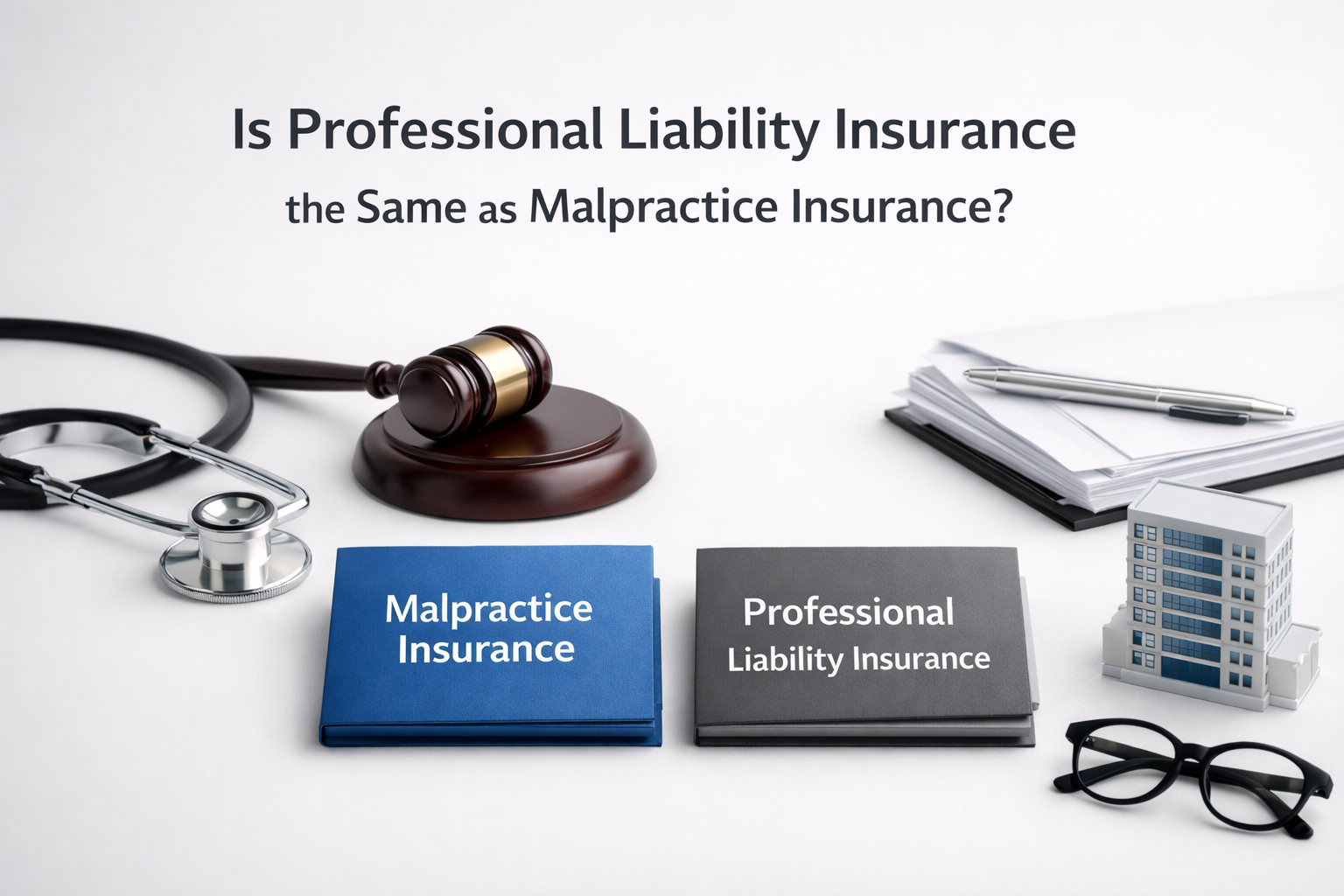
In practical terms, malpractice insurance is a specialized form of professional liability insurance, most commonly used in medicine, law, and licensed healthcare fields. Professional liability insurance is the broader umbrella term that applies to virtually every service-based profession, including consultants, accountants, engineers, and marketing professionals.
The confusion is understandable. Insurers and industries use these terms interchangeably in some contexts and distinctly in others. What’s labeled “malpractice insurance” for a surgeon and “professional liability insurance” for a management consultant often cover similar categories of risk, but the policy language, coverage triggers, and exclusions can differ significantly.
If you’re a consultant or small business owner wondering which policy applies to you, this guide will clear it up.
QUICK ANSWER
Professional liability insurance and malpractice insurance are closely related but not always identical. Malpractice insurance is a subset of professional liability insurance, typically used by medical and licensed professionals. For consultants and most non-medical service providers, professional liability insurance often called errors and omissions (E&O) insurance is the more relevant and commonly available term.
What Is Professional Liability Insurance?
Professional liability insurance protects individuals and businesses against claims that their professional services caused a client financial harm. It covers legal defense costs, settlements, and judgments arising from:
- Errors or mistakes in the work you delivered
- Omissions advice or steps you failed to take
- Negligence allegations, even when a claim is unfounded
- Failure to meet a professional standard of care
Unlike general liability insurance, which covers physical injuries and property damage, professional liability focuses on the financial and reputational fallout from your professional judgment.
You’ll hear this coverage referred to by several names depending on the industry: professional liability, errors and omissions (E&O), professional indemnity, and yes, malpractice. All of these sit under the same broad category of coverage.
What Is Malpractice Insurance?
Malpractice insurance is professional liability insurance by another name, but one that carries specific connotations. The term “malpractice” is most commonly associated with professions that carry a legal duty of care: physicians, nurses, dentists, therapists, attorneys, and similar licensed professionals.
When a doctor performs the wrong procedure or a lawyer misses a filing deadline, the resulting legal action is typically called a malpractice claim. Insurance written specifically to cover those risks is sold and marketed as malpractice insurance.
The policies themselves often mirror standard professional liability structures, they’re claims-made policies, they provide defense costs, and they cover settlements up to policy limits. What differentiates malpractice policies in practice is how they’re underwritten: they account for specialty-specific risk, licensing requirements, and the severity of harm that mistakes in those fields can cause.
Key Differences Between Professional Liability and Malpractice Insurance
Here’s a direct comparison of how the two terms are generally used in the US insurance market:
|
Factor
|
Professional Liability Insurance
|
Malpractice Insurance
|
|---|---|---|
The distinction is less about what the policies cover and more about the language used in specific industries. A malpractice claim against a doctor and a professional liability claim against a management consultant may look structurally similar, but the underlying risk, policy exclusions, and pricing models differ considerably.
Who Typically Needs Malpractice Insurance?
Malpractice insurance is most relevant for licensed professionals operating in fields where a mistake can cause significant physical, psychological, or legal harm to another person. These include:
- Medical professionals: Physicians, surgeons, nurses, dentists, chiropractors, and physical therapists
- Mental health practitioners: Psychologists, licensed counselors, and social workers
- Legal professionals: Attorneys in private practice or at law firms
- Healthcare-adjacent providers: Pharmacists, medical billers who handle sensitive records, and certain telehealth platforms
In many of these professions, carrying malpractice insurance is a licensing requirement or a condition of hospital credentialing, not just a business decision.
Who Typically Needs Professional Liability Insurance?
Professional liability insurance applies to a much wider range of occupations. If your clients depend on your advice, analysis, designs, or recommendations and a mistake on your end could cost them money, you likely need this coverage.
Common examples include:
- Management consultants and business advisors
- IT consultants and software developers
- Financial advisors and tax professionals
- Marketing and PR agencies
- Engineers and architects
- Real estate professionals
Even when you haven’t made a mistake, clients can file claims alleging that they did. Professional liability insurance covers your legal defense regardless of whether the claim has merit.
How This Relates to Errors and Omissions Insurance
Errors and omissions (E&O) insurance is another name for professional liability insurance just with different branding. The term “errors and omissions” is especially common in industries like:
- Insurance brokerage
- Real estate
- Financial services
- Technology and software
In practice, E&O and professional liability policies are functionally identical. They cover the same categories of risk mistakes, omissions, and negligence in professional services. The naming simply reflects industry convention.
So where does that leave malpractice? Think of it this way:
- Professional liability insurance is the parent category
- E&O insurance is a common name for professional liability used in financial and tech sectors
- Malpractice insurance is a specialized version used in medical, legal, and licensed professional fields
📖 RELATED READING
For a deeper breakdown of how E&O and malpractice policies compare including what each covers and excludes, see our companion article: Errors and Omissions Insurance vs. Malpractice Insurance.
Do Consultants Need Malpractice Insurance or Professional Liability Insurance?
For the vast majority of consultants, professional liability insurance (or E&O insurance) is the right coverage not malpractice insurance as it’s traditionally defined.
Here’s a practical way to think about it: if your work involves giving professional advice, delivering analyses, or completing project-based services for clients, and a mistake could result in your client losing money or suffering reputational damage, professional liability coverage is what you need.
Malpractice insurance is rarely offered to general business consultants because the term is tied to regulated, licensed professions with specific legal liability frameworks. An insurer writing policies for management consultants will call it professional liability or E&O, even if the underlying risks are similar to what a malpractice policy covers for a licensed professional.
A Note for Healthcare Consultants
If you’re a consultant who also holds an active medical, nursing, or clinical license — and you provide services that involve clinical judgment, you may need malpractice coverage in addition to, or instead of, standard professional liability. This is also true for legal consultants practicing law in an advisory capacity. When in doubt, disclose your full professional background to your insurer so coverage gaps don’t arise later.
📖 RELATED READING
To understand the full liability picture for consultants including when general liability and professional liability work together, see our pillar guide: General and Professional Liability for Consultants.
How to Choose the Right Coverage
Rather than getting hung up on the terminology, focus on what the policy actually covers. Here are the questions to ask before you buy:
- Is the policy claims-made or occurrence-based? Most professional liability and malpractice policies are claims-made, meaning the claim must be filed while the policy is active. Understand how this affects coverage if you let the policy lapse.
- What does the policy specifically exclude? Common exclusions include fraud, intentional wrongdoing, bodily injury, and certain contractual liabilities. Read the exclusions carefully, this is where gaps tend to hide.
- Does the policy wording match your profession? An E&O policy written for a software firm may have different coverage language than one written for a financial advisor. Industry-specific policies tend to offer better alignment with real-world risks.
- What are the per-claim and aggregate limits? A low premium often reflects low limits. Make sure the limits are sufficient given the scale of client contracts you work with.
- Does your client require specific coverage? Many enterprise clients include insurance requirements in their contracts. Check what your clients demand before selecting a policy.
Final Verdict
Professional liability insurance and malpractice insurance are not different products, malpractice is a specific application of professional liability, used in industries where licensed professionals carry a legal duty of care.
If you’re a consultant, business owner, or non-medical service provider, professional liability insurance — sometimes called E&O — is your relevant category. You won’t typically find a policy marketed as “malpractice insurance” in the general consulting market, and you don’t need to. The coverage you’re looking for exists under a different name.
If you’re in medicine, law, or another licensed field, malpractice insurance is the standard and in many cases, required, form of professional liability coverage for your profession.
The most important step isn’t getting the terminology right, it’s making sure your actual policy covers the specific risks of your work, with limits that make sense for the value of what you deliver.
Frequently Asked Questions
In broad terms, yes. Malpractice insurance is a type of professional liability insurance, but the term "malpractice" is primarily used in medicine, law, and licensed healthcare professions. For most other service providers, the coverage is marketed as professional liability or errors and omissions (E&O) insurance. The policies serve the same core purpose: protecting professionals against claims that their work caused financial or personal harm to a client.
Most consultants do not need malpractice insurance, they need professional liability insurance, which covers the same category of risk under a different label. Malpractice insurance is specific to licensed professions like medicine and law. The exception is a consultant who holds an active clinical or legal license and provides services that draw on that license directly.
Professional liability insurance covers claims arising from professional mistakes, bad advice, errors in delivered work, and omissions. Depending on your industry, you may see this sold as errors and omissions insurance, professional indemnity insurance, or malpractice insurance. All three fall under the same broad category of coverage for service-based professional risks.
Anyone whose business involves providing professional services, advice, or expertise to clients should consider professional liability insurance. This includes consultants, accountants, architects, IT professionals, financial advisors, engineers, and marketing professionals. If a client could suffer a financial loss because of a mistake you made or even claim that you did professional liability coverage provides a critical safety net.