PT Liability Insurance
A practical guide to professional and general liability coverage for physical therapists in clinical and consulting practice.
- July 1, 2026
- By Redouane Khaldi
- Est. Read Time: 7 min
On This Page
Introduction
Physical therapists work in close physical contact with patients every day, guiding recovery through manual therapy, exercise prescription, and hands-on rehabilitation. That proximity creates real exposure: a missed contraindication, an equipment malfunction, or a slip in a treatment room can turn into a costly claim. PT liability insurance exists to absorb that exposure so a single incident doesn’t threaten a practice’s finances or a clinician’s career.
This guide breaks down what this coverage actually includes, how professional and general liability differ, what drives premiums up or down, and how to select a policy that matches the risk profile of a modern physical therapy practice.
What Is Pt Liability Insurance?
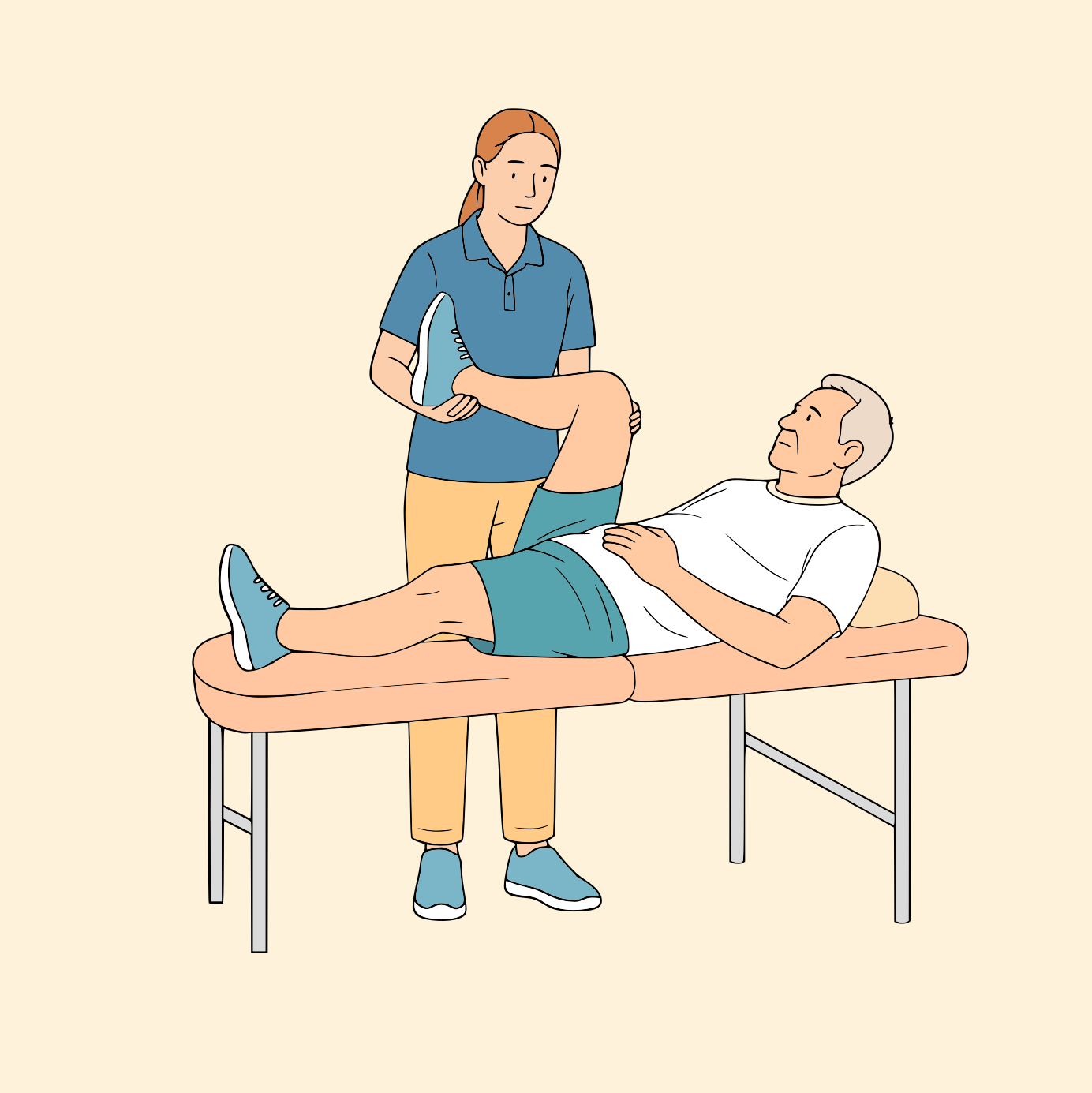
PT liability insurance is a package of coverages built specifically for the risk exposures physical therapists face in clinical practice. It typically combines professional liability (also called malpractice insurance) with general liability, and often adds product liability for practices that sell braces, supports, or other equipment.
Unlike a generic small-business policy, this coverage is underwritten with physical therapist insurance risk factors in mind: manual therapy techniques, modality use (ultrasound, electrical stimulation, dry needling), supervision of aides and students, and the home-health or mobile-therapy settings many PTs now work in. A policy that doesn’t account for these specifics can leave dangerous gaps.
Physical Therapists Need Dedicated Liability Coverage
Clinical work carries inherent risk. A patient can fall during a gait-training session. A modality can be applied incorrectly and cause a burn. A treatment plan can be challenged as negligent if a patient’s condition worsens. Without coverage, a physical therapist is personally exposed to legal defense costs, settlements, and judgments expenses that can reach well into six figures even when a claim is ultimately unsuccessful.
Licensing boards, hospital credentialing committees, and many employers also require proof of coverage before a therapist can practice or maintain privileges. For therapists who run their own clinics, treat independently, or take on contract and consulting work, liability insurance for physical therapists isn’t optional risk management it’s a baseline requirement for staying in business.
TIP💡
Switching carriers? Confirm tail coverage before your old claims-made policy lapses.
Professional Liability Vs. General Liability
The two halves of a physical therapist insurance package protect against fundamentally different types of claims, and confusing them is one of the most common coverage mistakes physical therapists make.
PT Professional Liability (Malpractice Insurance for Therapists)
Professional liability, often referred to as malpractice insurance for therapists, responds to claims that a therapist’s clinical judgment, treatment technique, or documentation fell below the accepted standard of care. This includes allegations of:
- Improper application of manual therapy or modalities
- Failure to recognize a contraindication or red-flag symptom
- Inadequate informed consent for a treatment plan
- Errors in supervision of assistants, aides, or students
- Documentation gaps that undermine a defense
This is the coverage a licensing board complaint or a patient malpractice suit draws on, and it typically includes defense costs even when a claim has no merit.
General Liability Coverage
General liability coverage, by contrast, addresses bodily injury or property damage unrelated to clinical treatment decisions. A patient who slips on a wet floor in the waiting room, a visitor injured by a falling piece of equipment, or damage caused to a rented clinic space all fall under general liability rather than professional liability.
Most comprehensive policies for physical therapists bundle both coverages, because a single incident a patient injury during a session, for example can trigger claims under both at once.
|
Coverage Type
|
Responds To
|
Example Claim
|
|---|---|---|
|
Professional Liability
|
Alleged negligent manual therapy causing injury
|
Alleged negligent manual therapy causing injury
|
|
General Liability
|
Bodily injury or property damage unrelated to treatment
|
Patient slips on wet clinic floor
|
|
Products/Completed Ops
|
Equipment or products sold or dispensed
|
Defective brace causes injury after dispensing
|
What A Pt Liability Insurance Policy Typically Includes
A well-structured policy for physical therapists generally provides:
- Professional liability limits commonly $1 million per claim / $3 million aggregate, though limits scale with practice size and risk profile
- General liability protection for slips, falls, and property damage on practice premises
- Legal defense cost coverage, paid in addition to (not deducted from) liability limits in most occurrence-based policies
- License protection coverage for board complaints and disciplinary proceedings
- Coverage for independent contractor and moonlighting work, when added by endorsement
- Products/completed operations coverage, relevant for practices dispensing braces, orthotics, or exercise equipment
Common Exclusions to Watch For
Standard exclusions typically include: sexual misconduct allegations (often requiring a separate endorsement), criminal acts, liability assumed under contracts the insurer wasn’t informed of, and claims arising from services outside the therapist’s licensed scope of practice. Reviewing the exclusions list before binding a policy prevents unpleasant surprises at claim time.
What Drives Pricing And Risk Exposure
Several factors shape what a physical therapist pays for coverage:
- Practice setting — Independent clinic owners and those doing home visits or mobile therapy generally carry higher risk profiles than employed hospital staff, since supervision, equipment, and environmental controls vary more widely.
- Scope of services — Dry needling, manual manipulation, and pediatric or geriatric specialties can shift premiums, since claim severity and frequency differ by technique and patient population.
- Claims history — Prior claims, even resolved ones, tend to increase premiums at renewal.
- Coverage limits and deductible — Higher limits and lower deductibles raise premium but reduce out-of-pocket exposure in a serious claim.
- Business structure — Solo practitioners, group practices, and those who also take on healthcare consultant insurance work (such as expert witness testimony or corporate wellness consulting) face different underwriting considerations than a single-location clinic employee.
- Claims-made vs. occurrence policy form — Claims-made policies are typically less expensive upfront but require tail coverage if the therapist changes carriers or stops practicing, which affects long-term cost.
How To Choose The Right Policy
Selecting adequate coverage starts with an honest inventory of exposure: What techniques are performed? Is care delivered in a clinic, in patients’ homes, or both? Are aides or students supervised? Is any consulting, teaching, or expert-witness work performed alongside clinical practice?
From there, three checks matter most:
- Match limits to real exposure. A solo practitioner with a narrow scope of practice has different needs than a multi-location clinic owner supervising a large clinical team.
- Confirm the policy covers every setting where care is delivered, including home health, telehealth, and contract work at outside facilities.
- Verify continuity protection. If moving from a claims-made policy, tail coverage or prior-acts coverage should be confirmed before the old policy lapses.
Physical therapists who also perform broader consulting work ergonomic assessments, corporate wellness programs, or expert testimony benefit from reviewing how their coverage aligns with the framework outlined in General and Professional Liability for Consultants, since that broader consulting exposure often calls for the same professional-plus-general liability structure PTs already carry, just extended to a wider scope of engagements.
For physical therapists evaluating their options in more depth, a full breakdown of policy structures and specialty considerations is available in our guide to liability insurance for physical therapists, which covers plan comparisons in greater detail than any single policy summary can.
Why Professional Coverage Is Essential for Risk Protection
The financial and legal protection that PT professional liability provides goes beyond simply paying a judgment. It funds legal defense from the first letter of complaint, protects personal and business assets from a judgment that exceeds a practice’s cash reserves, and in many cases preserves a therapist’s license by supporting a defense before a state licensing board. For practice owners, it also protects the value of the business itself a single uninsured claim can wipe out years of accumulated equity in a clinic.
Given how routine and how physically involved PT treatment is, going without dedicated coverage isn’t a cost-saving measure; it’s a transfer of risk from an insurer onto the therapist’s own assets and career.
Conclusion
Every physical therapist eventually faces a moment where clinical judgment gets questioned a patient who didn’t recover as expected, a fall during a transfer, a documentation gap raised months after the fact. Most of these moments resolve without incident. The ones that don’t are exactly why PT liability insurance exists: not as a formality for credentialing, but as the difference between a manageable dispute and a threat to a therapist’s license, savings, and practice.
The therapists who navigate these situations best aren’t the ones who never face a claim they’re the ones whose coverage was built around how they actually practice, not a generic template. That means limits that reflect real exposure, protection that follows care into homes and telehealth visits as readily as clinic walls, and a policy that doesn’t leave gaps between what’s covered and what’s clinically performed.
If your current policy was purchased quickly, inherited from a previous role, or hasn’t been reviewed against your actual scope of practice, now is the time to close that gap before a claim forces the question.
Frequently Asked Questions
Only if the policy includes prior-acts coverage, typically available when switching from one claims-made policy to another. Occurrence-based policies generally don't need this since they respond based on when the incident happened, not when the policy was active.
Yes. Malpractice coverage responds to clinical judgment claims; it won't cover a slip-and-fall or property damage claim, which falls under general liability. Most practices need both.
Premiums vary by practice setting, scope of services, and claims history, but many independent physical therapists pay in the range of a few hundred to just over a thousand dollars annually for standard limits, with higher-risk scopes and larger practices paying more.
Many are covered under a school's or employer's policy during supervised clinical rotations, but any independent, contract, or per-diem work typically requires individual coverage.
Disclaimer:This article is intended for informational purposes only and does not constitute legal or insurance advice. Coverage terms, conditions, and availability vary by carrier and jurisdiction. Consult a licensed insurance professional to assess your firm’s specific liability exposure and coverage requirements